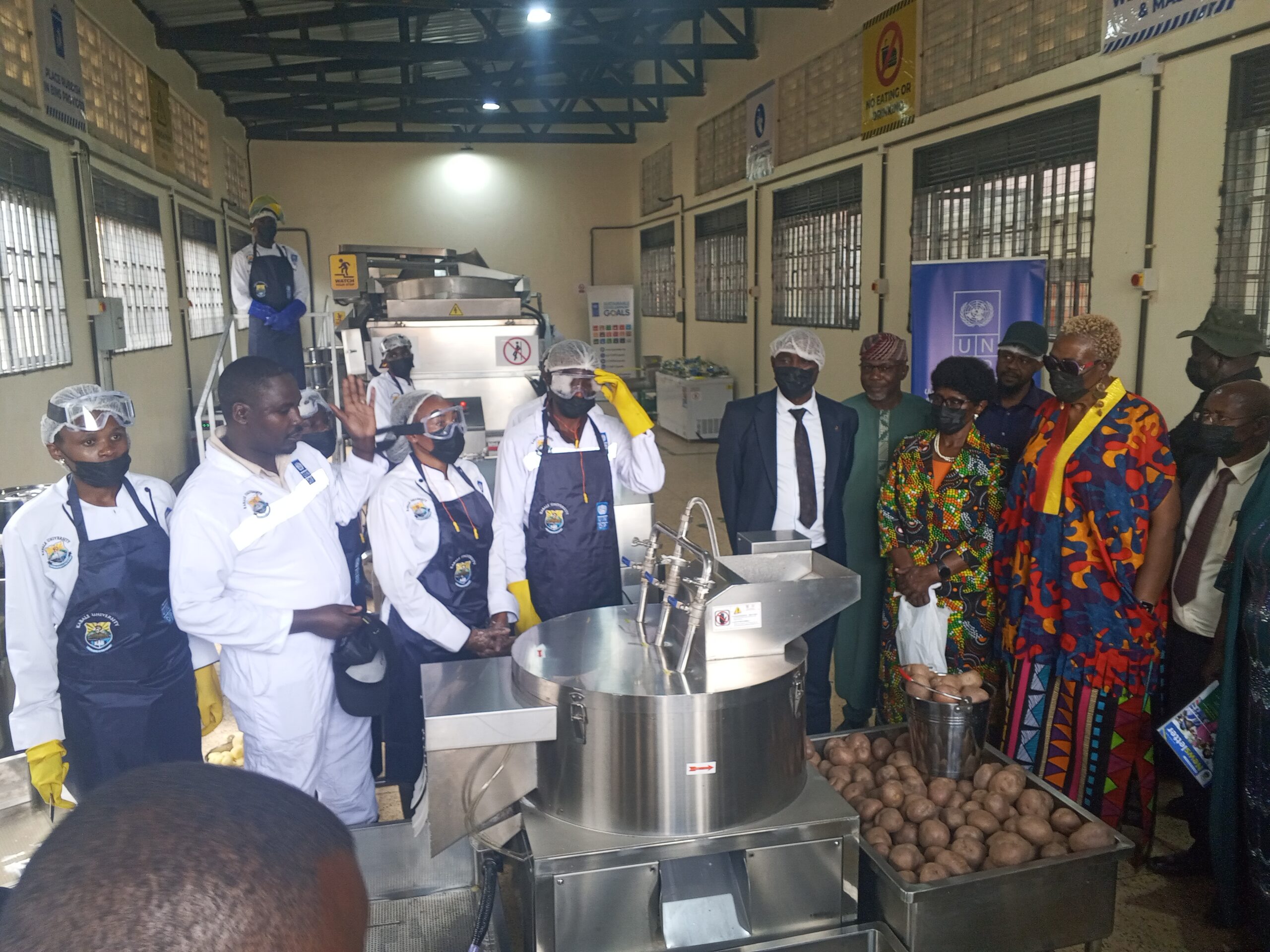
Kabale-Kabale University, with support from the United Nations Development Programme (UNDP) and the African Development Bank (AfDB), has launched a Business Incubation Center to promote innovation, entrepreneurship, and value addition in the Kigezi sub-region and beyond.
The center was officially inaugurated during a ceremony held at the university, attended by officials from the Ministry of Education and Sports, UNDP, the Uganda Development Bank (UDB), and regional leaders.
The Vice Chancellor, Prof. Joy C. Kwesiga, said the university’s growth depends on innovation and practical initiatives that translate academic knowledge into real-world impact.
She noted that the new center will benefit not only the university community but also students and local farmers through training, innovation, and job creation.
Representing the Permanent Secretary in the Ministry of Education and Sports, Hajji muzamir Mukwatampola, commended Kabale University for its visionary step, describing the center as a turning point in Uganda’s higher education and innovation landscape.
He encouraged young innovators to embrace creativity, resilience, and problem-solving, noting that innovation is about transforming lives, starting within their own communities.
The UNDP Resident Representative, Nwanne Vwede Obahor, praised Kabale University for demonstrating how institutions of higher learning can become engines of innovation and community transformation.
She said the Kabale University Business Incubation Center (KABBIC) and its Potato Value Chain Flagship Programme align with the UN Sustainable Development Goals (SDGs) particularly those targeting poverty reduction, hunger eradication, gender equality, decent work, and industrial innovation.
Obahor explained that the Potato Value Chain Programme, jointly implemented by Kabale University, UNDP, and UDB, aims to transform potato production in the Kigezi highlands through clean seed distribution, climate-smart farming, and value addition.
The initiative is expected to benefit over 150,000 farmers, create 10,000 jobs, and reduce Uganda’s import bill on potato products.
She emphasized that innovation must be rooted in local realities and strengthened through partnerships among government, academia, the private sector, and development agencies applauding UDB,NARO, and other stakeholders for their continued collaboration in advancing sustainable development across the region.