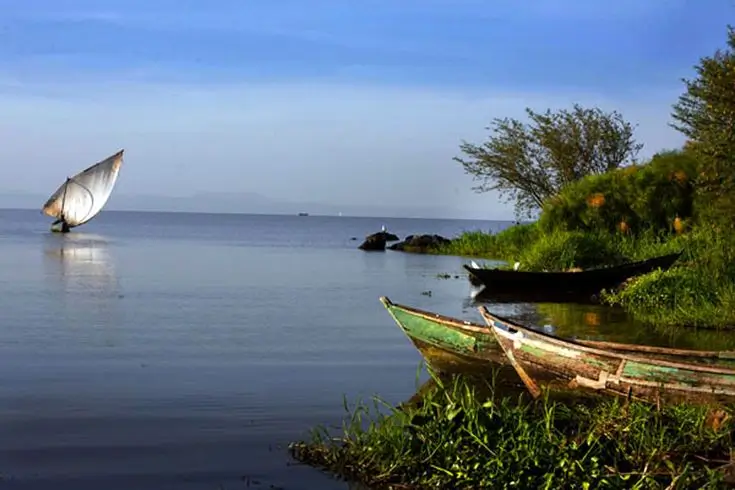
Residents around parts of Lake Victoria, especially Inner Murchison Bay, Luzira and sections of Entebbe, have recently complained of a strong and unpleasant smell coming from the lake. The Ministry of Water and Environment (MWE) says the smell is a result of pollution-driven algae blooms in the lake’s shallow bays .
According to the ministry, Lake Victoria supports more than 45 million people through water supply, transport, fishing, hydropower and trade. However, some bays around the lake have become heavily polluted due to human waste, plastic, industrial effluent, agricultural runoff and the destruction of wetlands that once filtered dirty water before it reached the lake .
“The bays receive heavy loads of pollution from surrounding communities, industries and farms,” the ministry notes, adding that Inner Murchison Bay is among the most affected areas because it is shallow and sheltered from the open lake .
Why the smell is getting worse
The ministry explains that pollution increases nutrients such as nitrogen and phosphorus in the water. These nutrients cause algae to grow rapidly. When the algae later die and decompose, they release gases like hydrogen sulphide and ammonia, which produce the foul smell .
“When algae from the blooms die and decompose, they consume oxygen and release gases which are the source of the unpleasant odour,” the statement explains. The process also reduces oxygen in the water, putting fish and other aquatic life at risk .
The situation has been made worse by the recent dry season and high temperatures, which accelerated the decomposition of dead algae, leading to stronger smells, especially around Inner Murchison Bay .
What government is doing
The Ministry of Water and Environment says several actions are already underway to address the problem. These include restoring degraded wetlands, enforcing a 200-metre buffer zone around the lake, and regularly monitoring water quality through monitoring stations in Kampala and Entebbe bays .
Industries around the lake are also being pushed to adopt cleaner production methods, recycle wastewater and reduce untreated effluent entering the lake. Authorities have increased enforcement of discharge permits for industries and municipal treatment plants .
What still needs to be done
Despite these efforts, the ministry admits more work is needed. Solid waste management around the lake remains weak, and enforcement of environmental laws by urban authorities needs to be strengthened. The ministry also calls for more public awareness and better farming practices to reduce pollution flowing into the lake .
“The algae blooms are a constant occurrence due to increased pollution loading,” the ministry warns, stressing that saving Lake Victoria will require cooperation between government, local communities, industries and environmental groups .
The ministry concludes by urging all Ugandans to take responsibility for protecting the country’s most important lake.