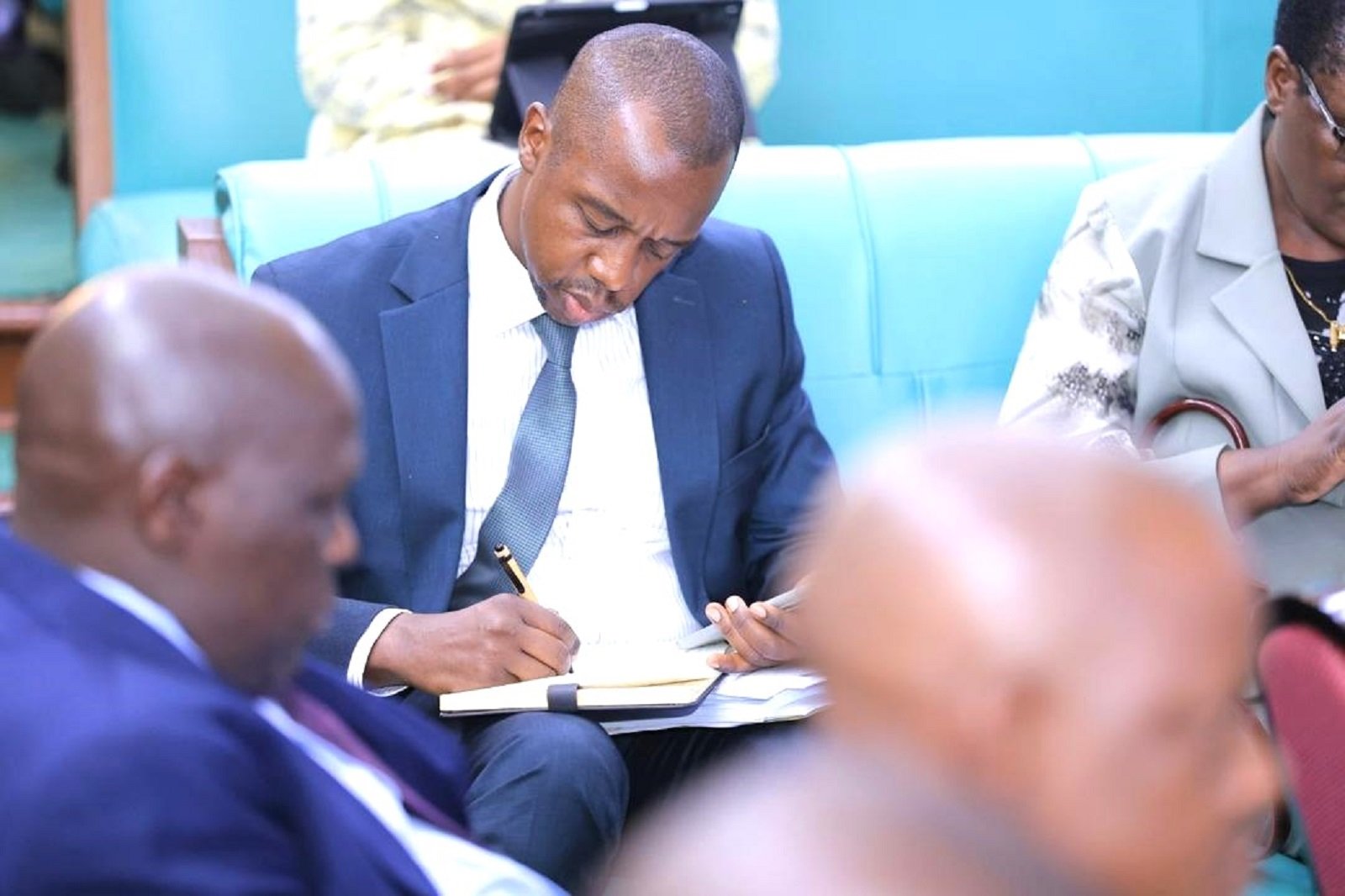
The Ministry of Health has completed plans for the recruitment of 17,000 health workers over a 10-year period, to bridge staffing gaps in regional referral hospitals and public health facilities across the country.
The revelation was made by the Minister of State for Health (Primary Health Care), Hon. Charles Ayume, during a Tuesday, 24 November 2026 plenary sitting wherein reports by the Committee on Health were debated.
The debate on these reports that were recently presented in the House, follows on the backdrop of oversight visits to national referral hospitals in the Kampala Metropolitan Area and regional referral hospitals in Eastern Uganda by the health committee.
According to Ayume, the Ministry of Health and Ministry of Public Service have, over the course of time, revised and expanded the infrastructure staffing norms, including specialised services.
He cited Health Centre IVs that previously required a total of 48 health workers, but now have a total staffing requirement of 150. He said the move to recruit more health workers would bring staffing up from 33 per cent, to 55 per cent.

“All this needs money, but also deploying health workers to facilities where there is no requisite infrastructure, equipment or housing, would not turn the amount into the best value for money. So we have to do it in a phased manner,” Ayume noted.
His comments follow concerns raised by legislators on the alarming rate of limited human resource deployment at public hospitals and health centres across the country.
Hon. Patrick Kiconco (NRM, Rukiga County) called for the deployment of specialist doctors at public regional health facilities including geriatricians and pediatricians, to enable all Ugandans to access specialised treatment.
“Diseases of older persons have been changing over time, and now we have only three specialised doctors for older persons in Uganda. One is employed at Mulago Hospital and two are in the private sector. We are also recruiting general nurses which has left our children at the mercy of nurses who may not have specialised training in the matters to do with children,” Kiconco said.
He added that supporting the Jinja School of Nursing and Midwifery to train more nurses specialising in child healthcare, will go a long way in reducing child mortality rates in the country.
Hon. Martin Mugabi (NRM, Buzaaya County) echoed the need for Parliament to prioritise funding to improve staff deployments, under the budget for the Ministry of Health.
Raising concern on the access to ambulance services, Burahya County MP, Hon. Joseph Mugyenyi said their cost is unaffordable for ordinary Ugandans, adding that legislators often step in to aid patients to obtain urgent ambulance support.
“Every week, I get calls from Fort Portal to sponsor patients to go to hospitals outside Kabarole. The ambulance cost for the driver and attendant nurse is high, and fuel has gone up. In the next budget, I request that issues of facilitation for ambulances and associated issues are handled,” Mugyenyi said.
Hon. Sheilah Amaniyo (NUP, Mukono District Woman Representative), observed that island areas lack access to ambulance services, noting that the water ambulance allocated to Koome Islands often has no fuel to ferry patients.
“This month, we had about eight women giving birth on local boats because they do not have money to fuel the ambulance to bring them to the mainland, which costs about Shs800,000. I would like the Ministry [Health] to look into this matter urgently,” said Amaniyo.
Ayume told the House that government has used the Shs20 billion allocated for ambulances under the 11th Parliament, to embark on the procurement of 50 “Type B” and two “Type A” ambulances, to ease access to the services.
“Type A” ambulances transport stable, non-emergency patients, whereas “Type B” ambulances provide basic life support and stabilisation for emergency patients.
“If we continue at Shs20 billion every financial year for the next three financial years, the issue of ambulances should be history. I call upon you colleagues, during the budgeting cycle, to even double it to Shs40 billion so that we buy about 100 units in the next financial year,” Ayume said.

He added that the ministry plans to increase the footprint of health facilities in island areas, where lower level health units will increase access to services by the resident locals.
“We can have smaller boats like the fibre boats that can work within the islands, and then build the capacity of health services on these islands with like x-ray facilities and so forth,” said the minister during the session chaired by Deputy Speaker Thomas Tayebwa.